PAWS-itively Natural Pets
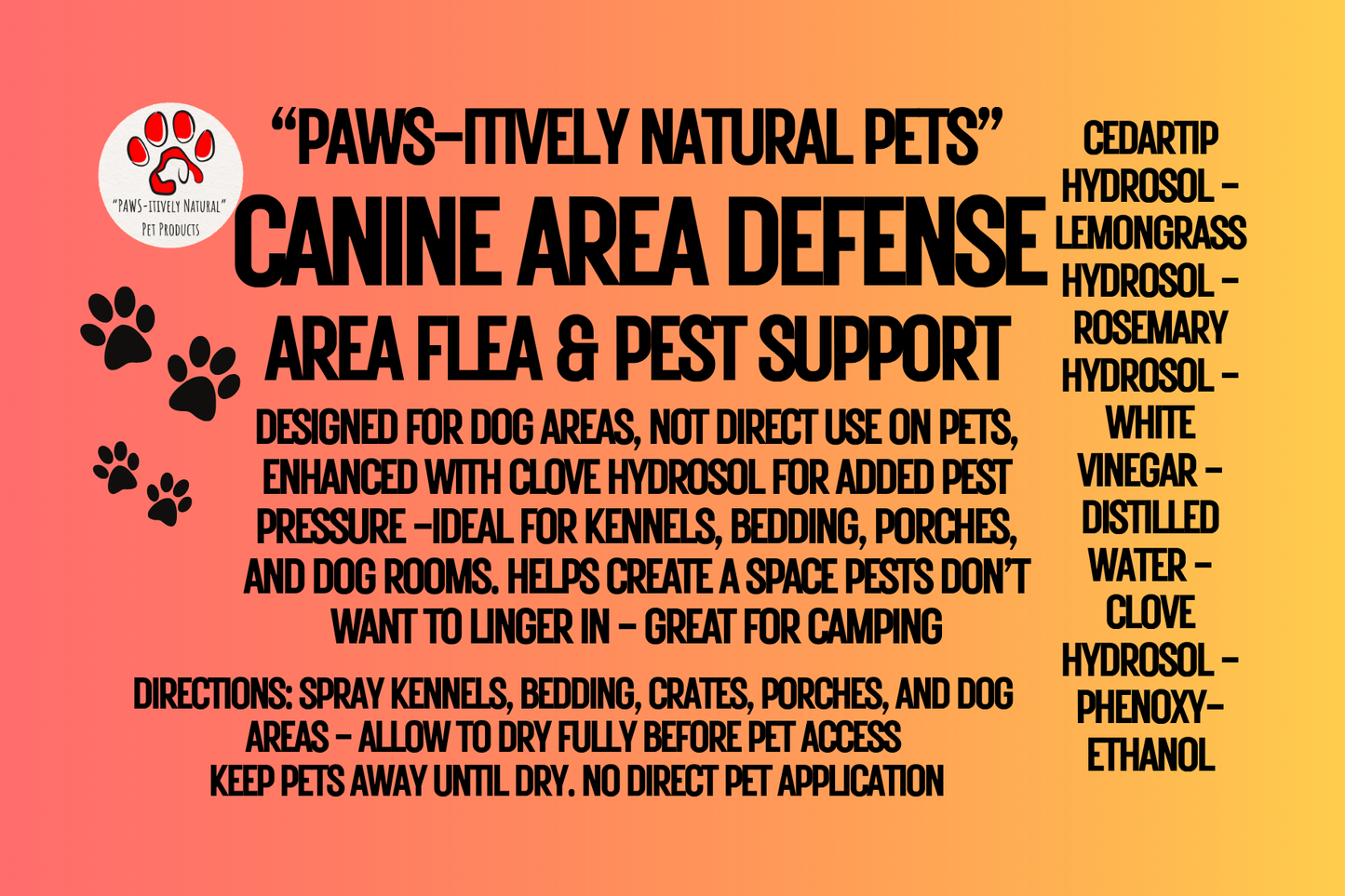
Canine Area Defense - Environmental Flea & Pest Spray for Dog Spaces
Canine Area Defense - Environmental Flea & Pest Spray for Dog Spaces
Couldn't load pickup availability
Canine Area Defense™
Botanical Environmental Flea & Pest Spray for Dog Spaces
Target the places fleas hide—not just the dog.
Canine Area Defense™ is a concentrated botanical environmental spray designed to help reduce flea and pest pressure in the places dogs spend the most time. While topical sprays protect the coat, fleas often live and reproduce in bedding, crates, kennels, patios, dog houses, and other resting areas. Canine Area Defense helps make those spaces less inviting to unwanted pests.
Crafted with Cedar Tip, Rosemary, Lemongrass, and Clove Hydrosols, this stronger environmental formula pairs aromatic botanicals with White Vinegar to freshen dog spaces while helping discourage fleas, ticks, and crawling insects from settling where dogs rest.
Use as part of your regular cleaning routine to support a healthier, more comfortable environment during flea season.
Benefits
- Helps discourage fleas, ticks, and crawling pests in dog areas
- Targets bedding, crates, kennels, and resting spaces
- Freshens fabrics and hard surfaces naturally
- Supports environmental flea management
- Stronger botanical formula than topical coat sprays
- Helps reduce reinfestation by treating where fleas live
- Ideal for routine household and kennel maintenance
Best Used For
- Dog beds and blankets
- Crates and kennels
- Dog houses
- Porches and patios
- Vehicle cargo areas
- Camping gear
- Grooming tables
- Indoor resting areas
How It Works
Fleas spend much of their life cycle away from the animal. Cedar Tip, Rosemary, Lemongrass, and Clove Hydrosols create a botanical scent profile that insects tend to avoid, while White Vinegar helps freshen treated areas and supports a cleaner environment.
Regular treatment of resting areas complements topical flea products by helping reduce the number of places where pests can settle.
Directions
Shake well before use.
Spray lightly onto bedding, blankets, crates, kennels, dog houses, carpets, furniture, patios, grooming areas, and other dog spaces.
Allow treated surfaces to dry completely before allowing pets back into the area.
Reapply as needed during flea season or after washing bedding.
Important
- Environmental use only.
- Do not spray directly on pets.
- Allow surfaces to dry completely before pet contact.
- Spot test delicate fabrics before use.
Ingredients
Cedar Tip Hydrosol, Lemongrass Hydrosol, Rosemary Hydrosol, Clove Hydrosol, White Vinegar, Distilled Water, Phenoxyethanol.
Where Canine Area Defense Fits in the PAWS-itively Natural™ System
Canine Area Defense™ protects the environment by treating the places where fleas hide, rest, and reproduce.
For daily protection on your dog, use Pest Away Canine™.
For extended hikes, camping, wooded trails, and heavy outdoor exposure, use Happy Trails™ Outdoor Flea & Tick Trail Guard.
Together, the three products provide a complete botanical approach by protecting the dog, the environment, and high-exposure outdoor adventures.
Share